Sunday, January 29, 2012

Attention writers: 100 Words for Facial Expressions

Here's an excellent list of names to explain to your readers what you are saying about someone's facial expression. How many times to you use the same words? Well, spice it up, keep it interesting:

1. Absent: preoccupied
2. Agonized: as if in pain or tormented
3. Alluring: attractive, in the sense of arousing desire
4. Appealing: attractive, in the sense of encouraging goodwill and/or interest
5. Beatific: see blissful
6. Bilious: ill-natured
7. Black: angry or sad, or see hostile
8. Bleak: see grim and hopeless
9. Blinking: surprise, or lack of concern
10. Blissful: showing a state of happiness or divine contentment
11. Blithe: carefree, lighthearted, or heedlessly indifferent
12. Brooding: see anxious and gloomy
13. Bug eyed: frightened or surprised
14. Chagrined: humiliated or disappointed
15. Cheeky: cocky, insolent
16. Cheerless: sad
17. Choleric: hot-tempered, irate
18. Coy: flirtily playful, or evasive
19. Crestfallen: see despondent
20. Darkly: with depressed or malevolent feelings
21. Deadpan: expressionless, to conceal emotion or heighten humor
22. Dejected: see despondent
23. Derisive: see sardonic
24. Despondent: depressed or discouraged
25. Doleful: sad or afflicted
26. Dour: stern or obstinate; see also despondent
27. Downcast: see despondent
28. Dreamy: distracted by daydreaming or fantasizing
29. Ecstatic: delighted or entranced
30. Etched: see fixed
31. Faint: cowardly, weak, or barely perceptible
32. Fixed: concentrated or immobile
33. Furtive: stealthy
34. Gazing: staring intently
35. Glancing: staring briefly as if curious but evasive
36. Glaring: see hostile
37. Glazed: expressionless due to fatigue or confusion
38. Gloomy: see despondent and sullen
39. Glowering: annoyed or angry
40. Glowing: see radiant
41. Grim: see despondent; also, fatalistic or pessimistic
42. Grave: serious, expressing emotion due to loss or sadness
43. Haunted: frightened, worried, or guilty
44. Hopeless: depressed by a lack of encouragement or optimism
45. Hostile: aggressively angry, intimidating, or resistant
46. Hunted: tense as if worried about pursuit
47. Impassive: see deadpan
48. Inscrutable: mysterious, unreadable
49. Jeering: insulting or mocking
50. Languid: lazy or weak
51. Leering: see meaningful; also, sexually suggestive
52. Meaningful: to convey an implicit connotation or shared secret
53. Mild: easygoing
54. Mischievous: annoyingly or maliciously playful
55. Moody: see sullen
56. Pained: affected with discomfort or pain
57. Pallid: see wan
58. Peering: with curiosity or suspicion
59. Peeved: annoyed
60. Petulant: see cheeky and peeved
61. Pitying: sympathetic
62. Pleading: seeking apology or assistance
63. Pouting: see sullen
64. Quizzical: questioning or confused
65. Radiant: bright, happy
66. Roguish: see mischievous
67. Sanguine: bloodthirsty, confident
68. Sardonic: mocking
69. Scornful: contemptuous or mocking
70. Scowling: displeased or threatening
71. Searching: curious or suspicious
72. Set: see fixed
73. Shamefaced: ashamed or bashful
74. Slack-jawed: dumbfounded or surprised
75. Sly: cunning; see also furtive and mischievous
76. Snarling: surly
77. Sneering: see scornful
78. Somber: see grave
79. Sour: unpleasant
80. Stolid: inexpressive
81. Straight-faced: see deadpan
82. Sulky: see sullen
83. Sullen: resentful
84. Taunting: see jeering
85. Taut: high-strung
86. Tense: see taut
87. Tight: see pained and taut
88. Unblinking: see fixed
89. Vacant: blank or stupid looking
90. Veiled: see inscrutable
91. Wan: pale, sickly; see also faint
92. Wary: cautious or cunning
93. Wide eyed: frightened or surprised
94. Wild eyed: excited, frightened, or stressful
95. Wistful: yearning or sadly thoughtful
96. Withering: devastating; see also wrathful
97. Woeful: full of grief or lamentation
98. Wolfish: see leering and mischievous
99. Wrathful: indignant or vengeful
100. Wry: twisted or crooked to express cleverness or a dark or ironic feeling


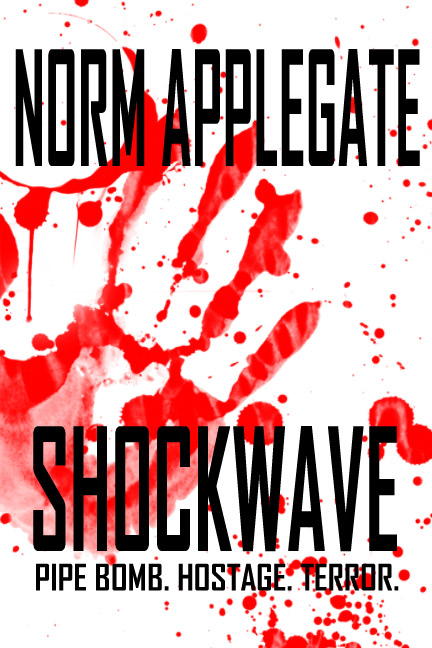
Author Norm Applegate:


Wednesday, December 28, 2011

Best concert, book and movies of 2011


Since the year is over. Thought I would share my views on 2011 with respect to music concerts, books and film.

Concerts:
            This year I was lucky enough to see Eric Clapton at the MGM in Vegas. Jeff Beck at Ruth Eckerd Hall in Clearwater. Rod Stewart in Vegas at the Forum and Andrea Bocelli in Tampa.

Winner for best concert – Jeff Beck.
            An incredible performer at age 66 emits high energy and is considered one of the best guitarists in the world. Beck is one of three noted guitarists to have played with The Yardbirds; (Eric Clapton and Jimmy Page). He also formed The Jeff Beck Group with Rod Stewart and Beck, Bogert & Appice. Interestingly he does not use a pick but instead gets incredible sounds from his fingers and the vibrato bar on his Fender Stratocaster. Curious fact: Jimmy Page played bass for a short time with Jeff Beck in the Yardbirds.

Winner for best book – Top Secret America: The rise of the new American security state. Dana Priest and William Arkin.
            Both authors are relentless reporters. Priest has won two Pulitzer Prizes for her work. In this book they uncover the explosive growth of America’s secret world since 9/11, it’s staggering. The waste, redundancy and domestic surveillance steps the government is taking is scary. The novel focuses on the Pentagon’s secret army that has killed more terrorists than the rest of the US forces combined. After 9/11 Congress gave a blank check to America’s secret security agencies with no public accountability. We worry about the government checking our email…oh it’s much worse than that. All the money, in the hundreds of billions and over 800,000 employees doing “Top-Secret,” work and guess who they’re focusing on next??? Us…!

Winner for best movie – Martyrs
            Okay, this is not a new movie (2008) but new for me. I saw it this year, heard about it for a while and it is the best horror to come out in years.
            This is a disturbing movie!!!!!
It’s a French film written and directed by Pascal Laugier. It is being ranked as one of the scariest movies ever made. The last 30 minutes is gruesome, some say the most intense ever filmed. It’s not the bloodiest but it’s intense. The reason why the torture is happening is so unexpected…it’s brilliant.

As a side note here’s a few of my favorite Netflix streaming movies:
            Let the Right One In
            Frontiers
    The Horde
    Them
    Creep
    Isolation
    High Lane
    Deathwatch

Norm Applegate author of:
Amazon

Wednesday, December 7, 2011

Improve Your Writing Right Now: 5 Steps


Lately I've been posting some tips to improve your writing, these five are excellent.


1. Avoid cliches like the plague: You can’t omit them altogether — and you shouldn’t try — but take care when recasting a tired word or phrase into something fresh and new. When calling attention to hypocrisy, instead of reciting the cliche “This is a case of the pot calling the kettle black,” you could write, “Keywords: pot, kettle, black.” You can also play with words, referring to an especially distraught drama queen as a trauma queen.


2. Avoid filler phrases: Delete content-free wording like “be that as it may,” “to all intents and purposes,” and “in the final analysis.” These prolix protrusions pop up naturally in speech to bridge a gap between one thought and the next, but although you’re forgiven for including them in a first draft, there’s no excuse for letting them pass inspection when you review your writing or edit someone else’s.


3. Avoid verbosity: Watch for wordy phrases like “in order to,” unnecessary words and phraseslike currently and “that is,” and smothered verbs (constructions in which a noun can be transformed into a verb, such as “offered an indication” when indicate will do.)


4. Avoid redundancies and repetition and saying the same thing twice: Take care to avoid doppleganger words in stock phrases — common, like filler phrases, to spoken language but inimical to good writing — like “actual fact” and “completely finished.”


5. Avoid repetitive sentence structure: Craft your prose in such a way that phrases, clauses, sentences, and paragraphs flow smoothly (avoid a Dick-and-Jane style of writing reminiscent of text in primary-grade reading books) — and consider the visual impact of your writing.


Norm Applegate author of:


Source: Dailywritingtips

Tuesday, December 6, 2011

This Book is a Gem

This book is a gem. It’s about zombies. It’s well told. It’s how the Victorian upper class deal with the undead.

I’m impressed by an author who can stay true to a time period like R.G. Bullet has done. But first a little bit about him. R.G. Bullet was born in Berkshire, UK. After living in nine different countries he has finally settled in Miami Beach, USA. He is addicted to tea, reading, writing, motorbikes and shamefully, Call of Duty.

Having published five novels, two are of The Keeper series and the other three; The Caldecott Chronicles, I suspect he’ll have another out shortly.

I had the pleasure of reading The Caldecott Chronicles Excerpt 1 of this short story series. I read the Kindle version and the graphic drawings; which are only a few come across excellent. The paperback is 120 pages. But it’s what’s in these pages, a hilarious, unique take on the zombie genre.

This is a tale of the undead set in 1899 from the Earl of Rothshire’s journal. It’s fun, graphic, very detailed and the references to the British era are brilliant. Here’s a sample of how R.G. Bullet describes a scene.
The undead and certainly unwashed are traipsing across overgrown lawns intent on ripping the very flesh from the Earl’s body, scooping his brains out and eating his remaining horse.
Very nicely done. Hard to imagine a zombie book written better than this.

Bottom line, The Caldecott Chronicles are a special find. 


Norm Applegate author of:

Monday, December 5, 2011

5 Tips for Cleaning Up Your Writing


Here are five quantitative quick tips about improving your writing functionally, before you even get into improving the quality of your prose:

1. Always Use Serial Commas

The policy of preceding every item in a list but the last one with a comma is commonsensical (read a previous article about the serial comma). Confusion is possible when you don’t and highly unlikely when you do. What if, using a non-serial-comma style, you write about more than two things when one of the things consists of more than one part or ingredient? (“The choices are roast beef, turkey, and ham and cheese.”) Do you insert a serial comma for clarity (and introduce an inconsistency) or leave the sentence as is for readers to stumble on? Adherence to serial-comma style eliminates the dilemma.

2. Minimize Capitalization

Job titles are capitalized only before names. Names of academic majors aren’t capitalized unless they are already proper nouns, like names of languages (“English”) or references to regions (“Asian studies”). Generic names of entities (“the hospital,” “the organization,” and so on) are lowercased. Yes, capitalization is a minefield; when in doubt, look it up, and search on this site for “capitalization” for many articles on the topic (including this one).

3. Repair Comma Splices

A comma alone cannot separate two independent clauses in a sentence. Break the clauses into distinct sentences, or separate them with a semicolon or an em dash — or a comma and a conjunction (and, or, and so on) — but not with a comma alone. For more information on this topic read 5 Ways to Fix the Comma Splice.

4. Omit Extraneous Hyphens, and Insert Necessary Ones

“Decision making,” “problem solving,” and similar compound nouns require no hyphen, unless they precede a noun as a compound modifier (“decision-making procedure,” “problem-solving aptitude”). “Near collision” and other similar constructions don’t, either, with the same exception (“near-collision statistics”). Established compound modifiers usually don’t require a hyphen even before a noun (“high school student”). Confused? Here’s a simple rule: Look it up. (And check out this DailyWritingTips article and find others on the topic by searching on the site for “hyphens.”)

5. Limit Displays of Emphasis

Words can be italicized to indicate that they are being used to refer to themselves, not the things they stand for (“Note the word emphasis”), or to signal a foreign term (“Wunderbar” means “wonderful”), or to make sure the reader understands that something is really important. Words can be initial-capped to indicate irony or other humorous intent. (“The rent-a-cop exuded the air of an Authority Figure.”) Boldface is appropriate for introducing new vocabulary or otherwise calling attention to an unfamiliar term but is best limited to textbooks and guidebooks. But all-caps are invariably excessive, “scare quotes” are seldom necessary, and be judicious about otherwise calling attention to words and phrases.


Norm Applegate author of:


Shockwave


Into the Basement

Source: Dailywritingtips

Monday, November 21, 2011

A Disturbing Expose on Counter Terrorism. Gave it 5 Stars!


Dana Priest and William M. Arkin, have written an incredibly important book. “Top Secret America.” Bottom-line, they have unveiled JSOP, Joint Special Operations Command, the pentagon’s secret killing machine and the growth of America’s post 9/11 counter terrorism agencies. Frightening.
            Priest is a two-time Pulitzer Prize winner and along with Arkin, they expose the secret buildings, unlimited funding in the billions and sadly how no one in Congress is accountable.
            Some worry about surveillance by Goggle and Facebook! It’s nothing compared to what the government is doing in the name security. Not sure what we are getting for the vast dollar amount spent by Congress. Close to a trillion dollars has been spent!
            The CIA, NSA and who knows how many other secret agencies involved missed the “Arab Spring.”
            The book is a must read for anyone interested in where our nation is headed.
            Dana Priest and William M. Arkin deserve another Pulitzer.


Norm Applegate
Author of Shockwave

Sunday, November 20, 2011

7 Sentence Structures


Sentence structure can be categorized into seven patterns: one simple, three compound, two complex, and one compound-complex. Here are examples of each pattern with accompanying formulas, all to help you think of how to craft sentences in a greater variety of syntax:

1. Simple sentence (independent clause): “I went for a walk.”
(An independent clause is set of words that includes a subject and a predicate. It can be a sentence or part of one. A dependent, or subordinate, clause is one that cannot stand on its own but provides additional information to supplement an independent clause.)
2. Compound sentence, IC+CC+IC (independent clause plus coordinating conjunction plus independent clause): “I went for a walk, and I was soothed by the gentle night air.”
(Coordinating conjunctions are words that link one independent clause to another to form a compound sentence. These words can be recalled with the mnemonic FANBOYS and include forandnorbutoryet, and so.)
3. Compound sentence, IC+S+IC (independent clause plus semicolon plus independent clause): “I went for a walk; I was soothed by the gentle night air.”
4. Compound sentence, IC+AC+IC (independent clause plus adverbial conjunction plus independent clause): “I went for a walk; consequently, I was soothed by the gentle night air.”
(Adverbial conjunctions are adverbs that serve, when following a semicolon, to link independent clauses. They include consequentlyhowevermoreoverneverthelesstherefore, and thus.)
5. Complex sentence, DM+C+IC (dependent marker plus clause plus independent clause): “Because I hoped to be soothed by the gentle night air, I went for a walk.”
(Dependent markers are words that provide a relative context for a subordinate clause. They include after,althoughas, “as if,” becausebeforeifsincethoughuntilwhenwherewhether, and while.)
6. Complex sentence, RP+C (relative pronoun plus clause): “Whatever doubts I had about taking a walk dissipated when I was soothed by the gentle night air.”
(Relative pronouns are pronouns that relate a subordinate clause to the noun it modifies. They include who,whomwhosewhoeverwhosoeverwhomeverwhichwhatwhatever, and sometimes that.)
7. Compound-complex sentence, DC+IC+CC+IC (dependent clause plus independent clause plus coordinating conjunction plus independent clause): “As I headed out for a walk, my doubts about doing so dissipated, and I was soothed by the gentle night air.”
There are, of course, many variations to these patterns; even a simple sentence, for instance, can begin with the object in the example converted to the subject of another simple sentence: “A walk was my next order of business.”


Norm Applegate author of:
Shockwave